My Southern Africa Safari Begins

Hi All,

Many of you have asked to see some photos from my summer trip to South Africa, Zimbabwe and Botswana.

Because I took ~ 600 photos…most of which weren’t really very good… I thought that sending you  just a few pix for the next several days might be a better way to share my experience with you. 

 One thing to remember is that it was mid-winter in that part of the world then, so the mornings & nights were quite chilly….especially when riding in an open-air vehicle!  The daytime temps rose considerably  as we traveled north.  Also, with a few exceptions, it was not safe to leave the vehicle to get that perfect picture as the “Big 5” (lions, leopards, African buffalo, rhinos & elephants) were free-roaming in most areas.  The hippos would just as soon trample you, too, so we always had to remain at a safe distance in the van!   The impalas and other ungulates were plentiful and easier to photograph.  We saw many different birds each day, but they were difficult to “shoot” under the circumstances.   Excuses, excuses!

Landscape-wise, except in the canyon areas, the land was pretty flat and covered with scrubby plants &  a few stunted trees… aptly referred to as “the bush”.  This is the region’s dry season and everything looked pretty parched everywhere we went. There are some notables exceptions:  the areas adjacent to the Zambezi River & Victoria Falls  and the Chobe and Okavango Delta regions.  More on those later!

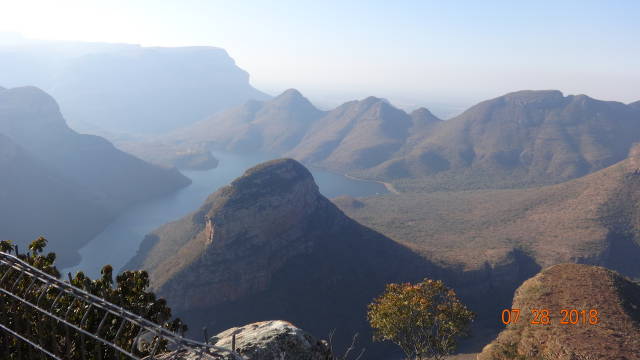
 We left Johannesburg early on July 28th to reach our first night’s destination:  Nsele “Honey-Badger” Lodge …which is a no-frills camp run by an Afrikaans couple tucked deep in the bush about an hour from an entrance into the famed Kruger national park. En route, we passed through the scenic Blyde River Canyon area and stopped for lunch at the local lodge there where we could appreciate the unusual rock formations from our outdoor table.  Surprisingly, even in the remote areas of South Africa, we were pleased to learn that the water is potable!

 I hope that you enjoy  reading my blog & seeing these photos as much as I enjoyed being there to take them!         ~Dab
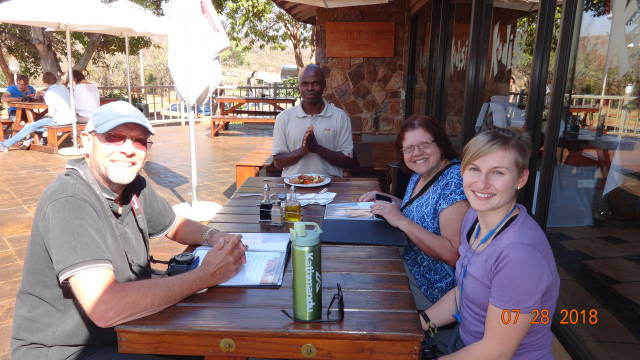
 

travel mates

Travel-mates at lunch en route to the Nsele Lodge , South Africa
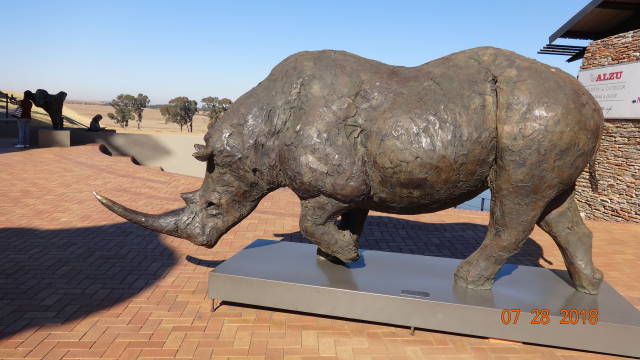
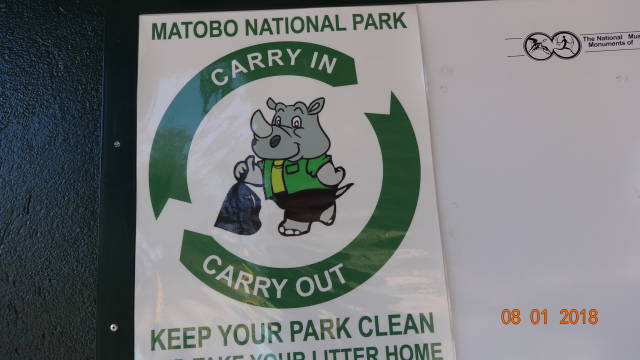
rhino- what we hope to see lots of!
rhino sculpture outside of Johannesburg


lunch stop
a nice lunch spot & motel along the Blyde Canyon Hwy.
Blyde River Canyon
View of the hazy Blyde River Canyon


Kruger Park- An Animal Lover’s Paradise

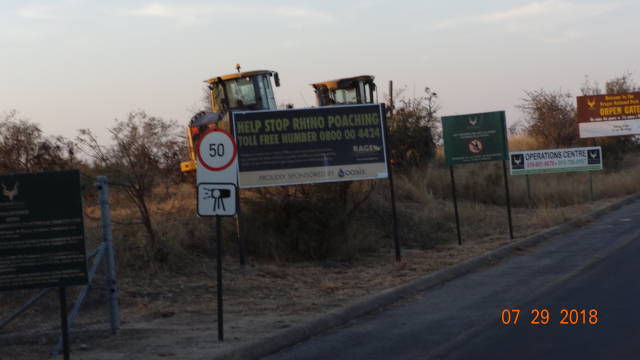
After a strong cup of African-grown coffee to pry open our sleepy eyes, we headed out  to Kruger National Park just after dawn in a “game viewing vehicle” driven by our Afrikaans host and local guide, Olaf.      Even before entering the park, we saw many animals along the way, including elephants & giraffes.  The poaching of these  two species,  as well as of black & white rhinos, is a major concern to both conservationists and African governments alike….and  measures have been taken everywhere to discourage the widespread slaughter.     The regions where these animals live are too vast to surveil, so anti-poaching efforts are mostly ineffective. Not only is the wildlife being killed and tourism impacted, the money made from the sale of ivory & horn often funds terrorist groups.  Bad business all around!!

On a brighter note, there are still a LOT  of wonderful animals of every stripe (inc. zebras!) roaming  wild & free in southern Africa..especially in the enormous acreage set aside in Kruger.  Below is a small sampling of what we saw there. ( More pix will follow .)

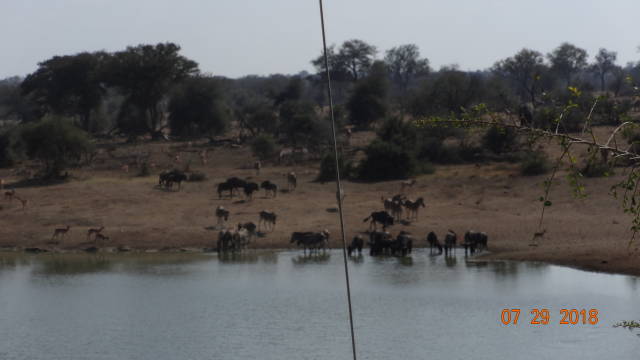
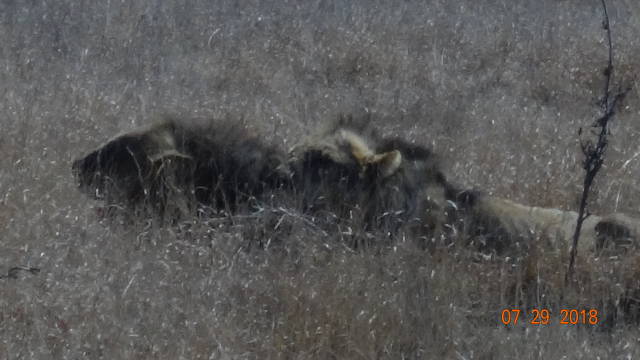
 During the dry season, the best viewing spots are above the few watering holes or reservoirs found throughout the park.   In just an hour’s time, we watched wave after wave of animals cautiously approach the water to take a long needed drink. A couple of lions were within attacking range, but apparently weren’t in “hunt-mode” as they dozed contently in the shade nearby.

Kruger Park is home to more than 500 species of birds and ~ 150 kinds of mammals..plus many types of reptiles, including the infamous Nile crocodile which can grow to 20 feet long.   We saw a few smaller crocs sunning by a waterhole, but they blend into the surroundings so well that I wasn’t able to get a good photo of them.  Guess I’ll just have to go back!


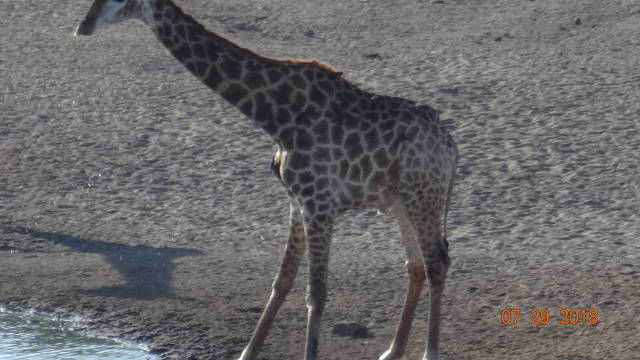
giraffe at water's edge
Giraffe at water hole in Kruger NP
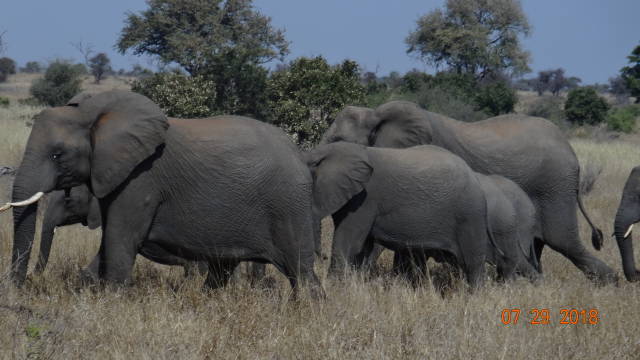
elephant herd
part of a large herd of elephants
animals at waterhole in Kruger NP
Traffic jam at the reservoir
2 sub-adult male lions
2 young male lions taking a siesta
early arrival at Kruger Park
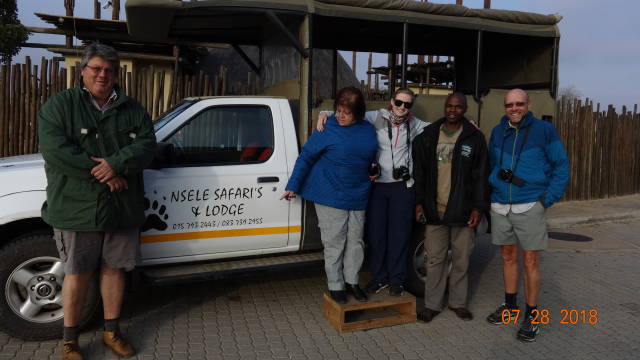
My tour group with our driver & owner of Nsele lodge (Olaf)
anti-poaching sign at park entrance
Anti-poaching sign at the entrance to Kruger NP


More pix from Kruger NP

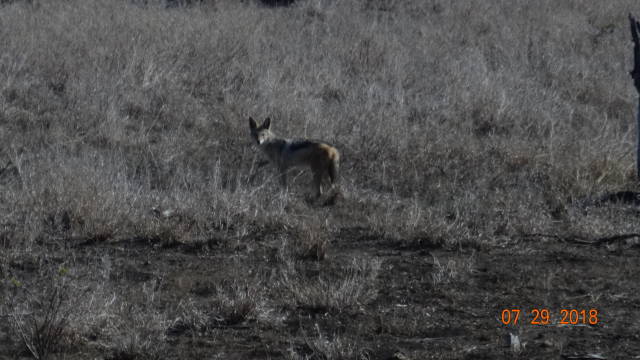
These pix represent just a fraction of the many animals at the park. Other animals we saw at Kruger were (based on my notes) : zebras; warthogs; hyenas; chacma baboons; honey badger; African buffalo; wildebeest; steenbok; bushbuck; nyala;  terrapin (turtle); vultures; violet-breasted rollers; red-billed oxpeckers; maribou; kori bustards; secretary birds; guinea fowl; African mourning doves; and Burchell’s starlings.

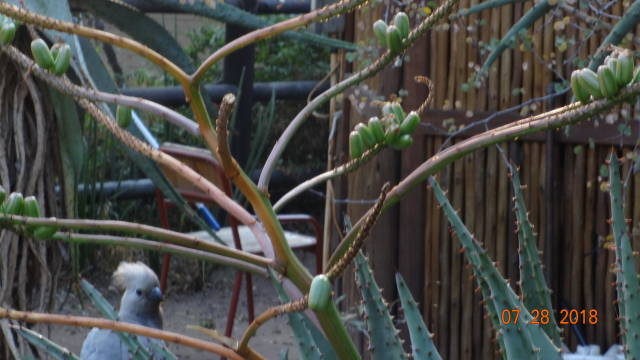
 One foot note: the grey lori is also called the   “go-away bird” because it shrieks at predators that come close…alerting all other prey-species in the area.  He’s well-liked by all…except for the predators, of course!


black-backed jackal
black-backed jackal
go-away bird
grey lori  the  “go away bird”
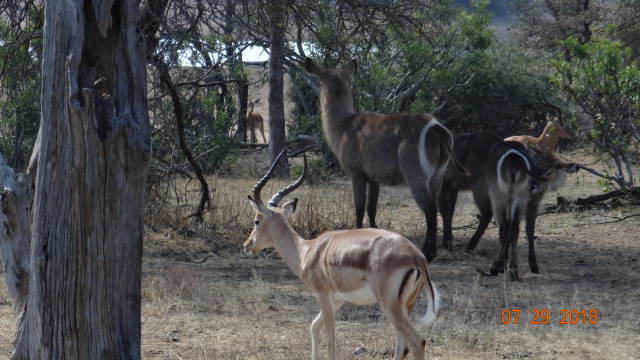
impala & bushbucks
impala with waterbucks
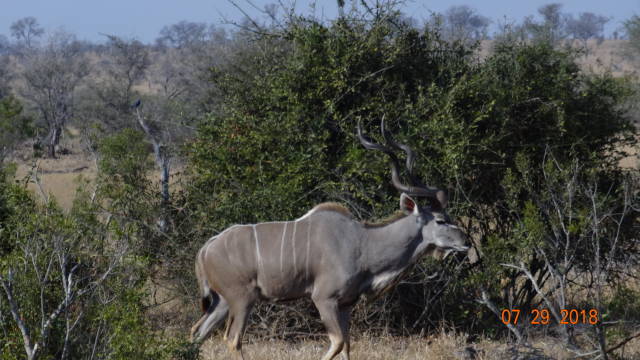
Kudu
male kudu
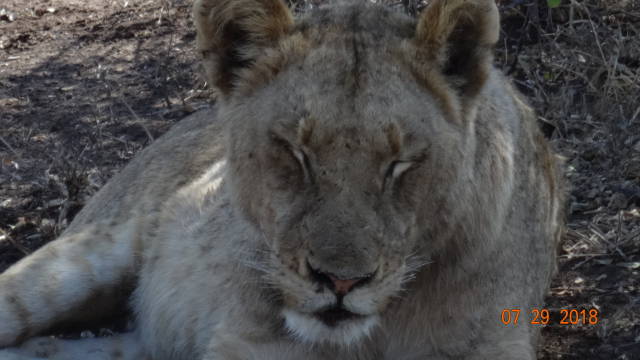
lioness taking a cat nap
young lioness taking a cat nap
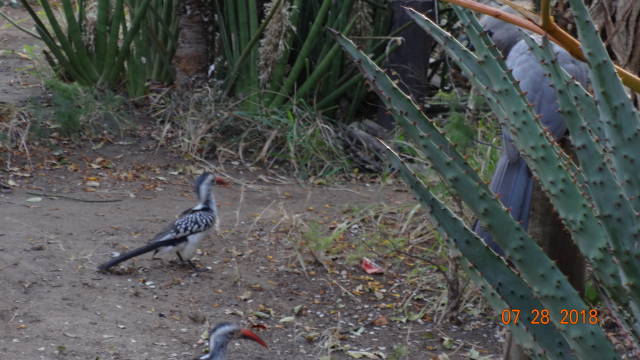
red-billed horn bill
red-billed hornbills

Heading North to Polokwane

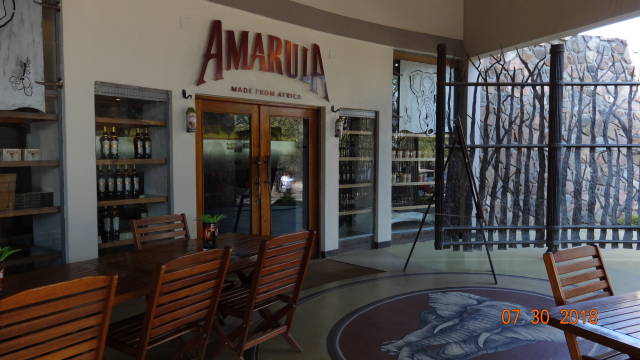
The skies which had been hazy since leaving Johannesburg (“Jo-burg”), owing to the dust & smoke from coal-burning electric plants and diamond mining operations, cleared as we headed north to our next destination.  Polokwane is the name of both a town and its nearby wildlife preserve…but is known mainly as the “fruit & veggie basket” of the region.  Citrus groves particularly thrive in this area.  En route to the wildlife preserve, we stopped at a tasting room for “Amarula”…a  reportedly delicious liquor made from oranges and heavy cream.  As it was still early in the day, I opted for the fresh orange juice instead which was delicious, too!    

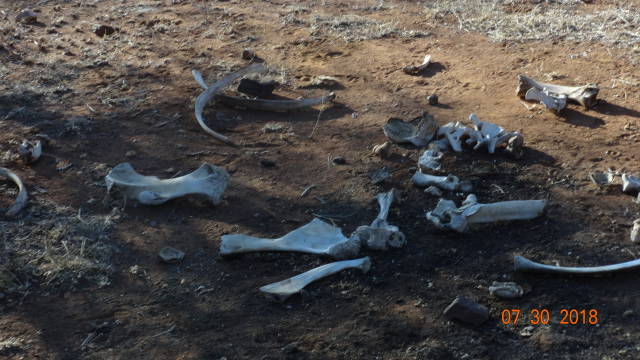
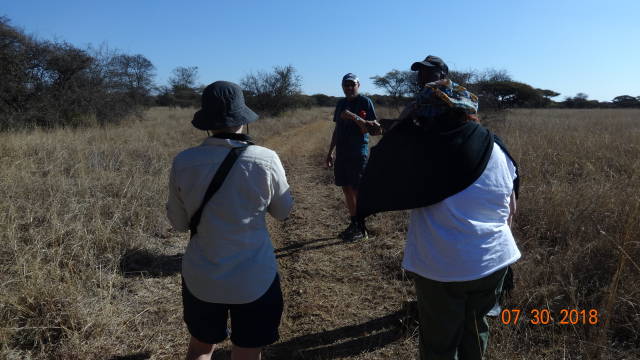
 The Polokwane reserve is much smaller & less diverse than Kruger NP…and we were told that there were no dangerous animals in this park (except for white rhinos!), so we were able to take a 2 hour hike in quest of the more gentle critters…like birds and the many members of the antelope family.  We didn’t find any rhinos but, sadly,  did come across the scattered remains of an elephant.

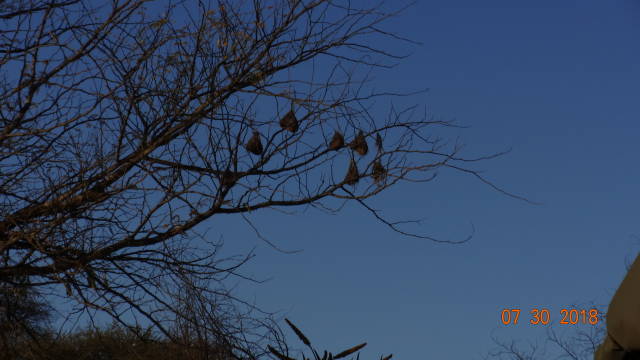
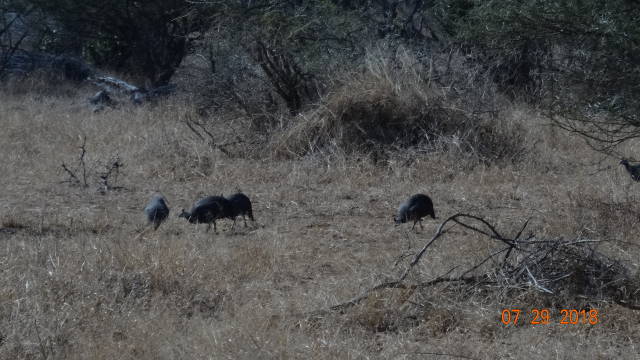
 Avians were quite plentiful at Polokwane. One interesting bird called the ‘buffalo weaver’,  builds several nests in a single tree as decoys…in hopes that a hungry tree snake won’t be able to find the “real” nest containing the bird’s eggs or hatchings.  A clever ‘bait & switch’  survival strategy!


amarula tasting roomJPG
Amarula (citrus liquor) tasting room
buffalo weaver bird nests
buffalo weaver bird’s multiple nests
elephant bones
old elephant bones
guinea fowl
guinea fowl
Polokwane Game Reserve
nature walk at Polokwane
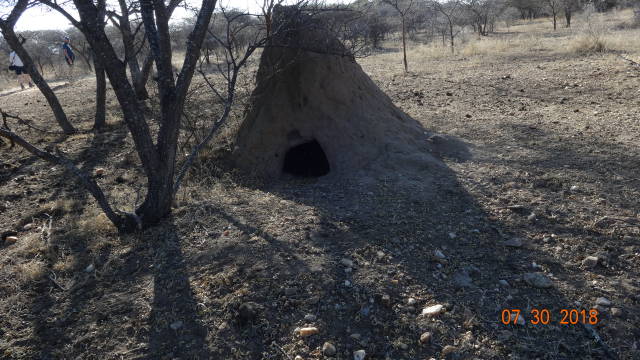
termite mound after aardvark attack
termite mound after anteater invasion

Crossing into Zimbabwe

Although its two closest neighbors (SA & Botswana) have recovered from the 2008 world recession, Zimbabwe is still struggling economically…and politically.   The country is in desperate need of foreign currency and the US dollar is king there now.  The $30 visa fee levied when crossing the border must be paid in US tender…luckily my Aussie travel-mates were prepared!

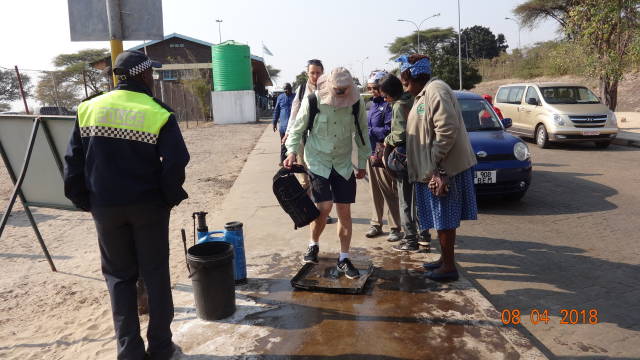
 The highly contagious “foot & mouth disease”  is another problem facing  the nation’s cattle industry.  As a result,  as part of being processed thru immigration, everyone had to walk thru a shallow pan filled with a potent anti-microbial solution.  Not only that, we had to take all extra pairs of shoes out of our luggage and dip them, too!   I wanted to get a photo of this, but the border guards  there were a little touchy about certain things…kinda like our TSA personnel!

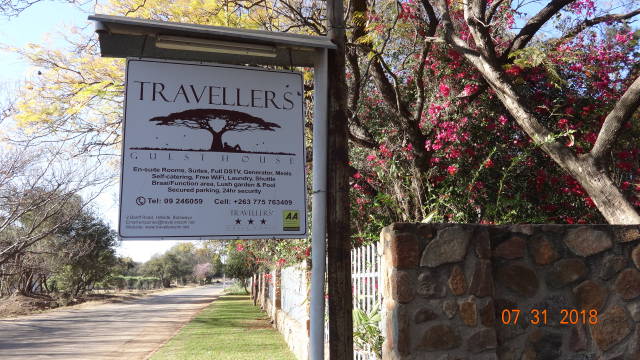
 Our next lodging was located in the city of Bulawayo…a surprisingly attractive town with  wide, tree-lined streets and many nice homes.  Our accommodations were modest but there was a small swimming pool…if you were brave enough to take a chilly  plunge!

  After dinner we met- up with our local guide Norman…a 3rd generation resident of British heritage who, despite his bush- weathered appearance, spoke the “Queen’s English” and was a wealth of knowledge about everything under the Zimbabwean sun.  Early the next morning, we piled into his open air vehicle and headed for Matobo N.P…  about an hour’s drive away.

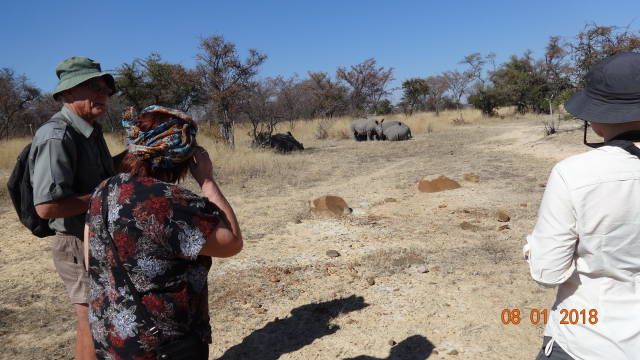
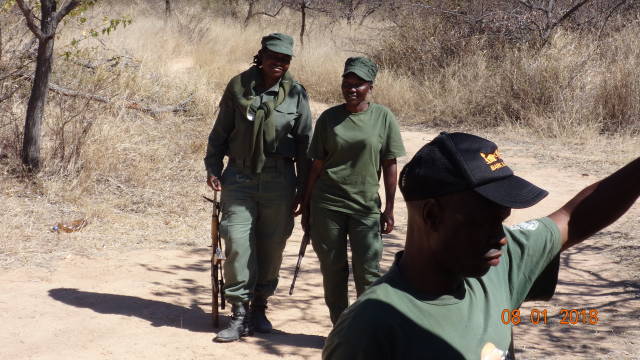
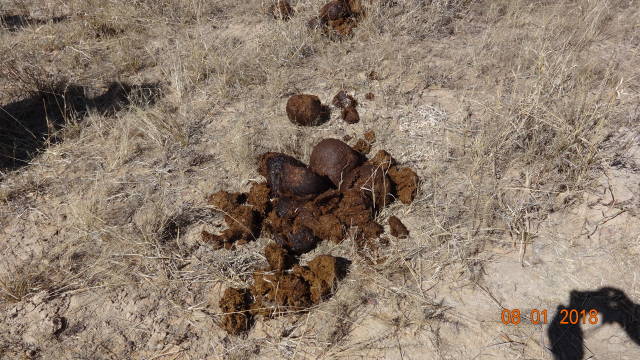
  Matobo  is known for 2 things:  it’s white rhino population and  the women rangers who are assigned to protect them.  We met 2 of these gender-bending professionals as they accompanied us on our hike in search of a family of rhinos known to be in the environs.  We were assured that the rhinos are generally tolerant of people…as long as we kept a respectable distance and didn’t make any sudden movements or loud noises.   We all hoped this was true as you don’t want to upset  any animal that weighs 2- 4 tons and can run a lot faster than you.  The mere sight of their scat we passed on the trail was intimidating!    

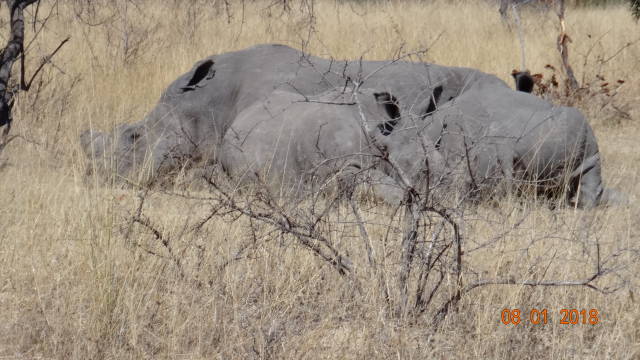
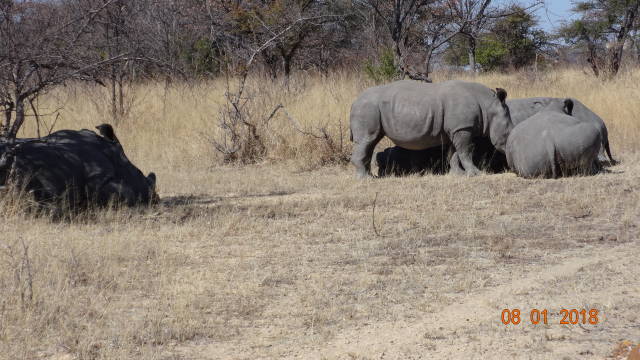
 After a 20 minute walk, we came upon a rhino family of four, consisting of a large female  adult and the three calves she was raising…a 1 yr. old, an orphaned 2 yr. old and a 3 yr. old who was almost as enormous as her mother.  The 2 younger calves were taking turns feeding for quite a while  until mom got tired of us  photo-snapping voyeurs and slowly got up & lumbered away with her charges in tow.  We all felt lucky to have been this close encounter (about 75 ft. away)  with these wild rhinos!    

Btw…the  2 main differences between a black and a white rhino is not their color, but their size and the shape of their mouths.    White rhinos are somewhat larger  than their cousins. The black rhino’s “prehensile lip” is suited for plucking leaves from bushes, while the white rhino’s wide-track mouth is adapted to grazing on grasses. They are both shades of gray, so to speak!


2 baby rhnos feeding
white rhino family
famiy of 4 whte rhinos
mother rhino with her 3 calves, including one adopted one
guest house in Bulawayo Zimbabwe
our lodgings in Bulawayo
hike in Matobo N.P
coming upon a family of 4 rhinos
Matobo N.P. sign
The local version of “Smoky the Bear”
rhino scat
rhino “fertilizer”
women rangers at Matobo
2 women park rangers with our driver Simon

Just outside of Matobo NP

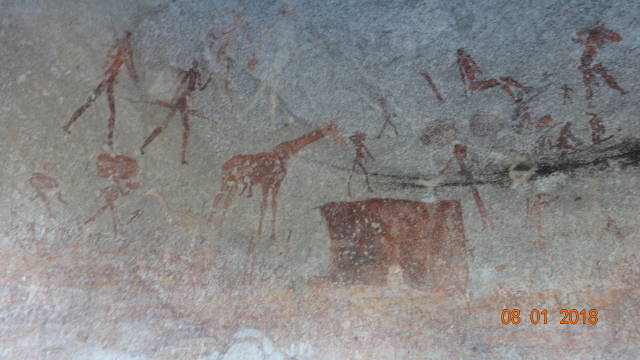
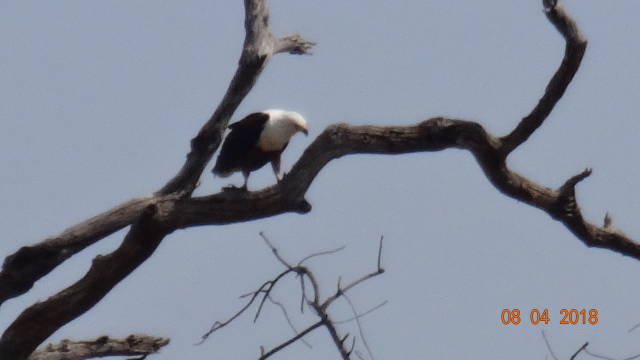
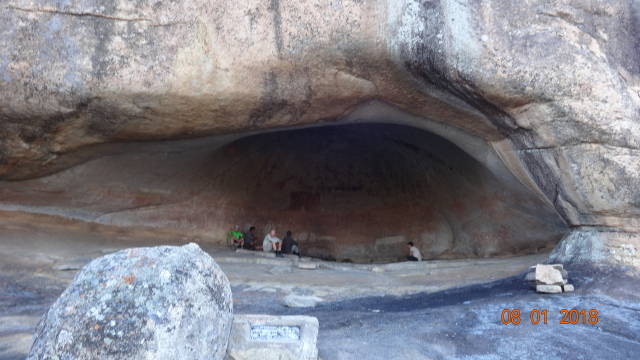
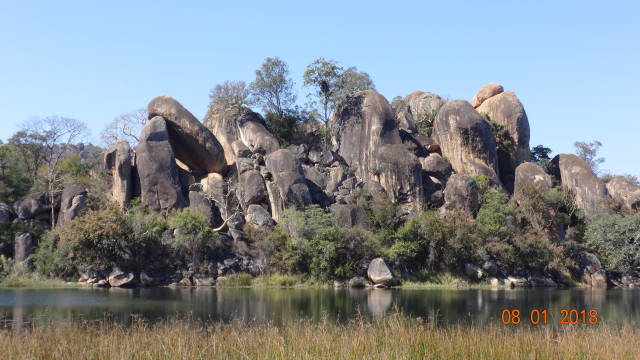
After that  intimate rhino encounter,  we returned to our vehicle and headed toward a scenic reservoir just outside the park where we  watched  fish-eagles soar overhead as we ate our homemade picnic lunch.   The rocky cliffs there were spectacular and offered a sharp contrast to the mainly flat terrain we had seen in the  park.  After our tasty repast, we headed toward a remote location set deep in the hills  where some ancient cave art was hidden out of view.   The steep ascent to the mouth of the cave was quite a challenge but well worth the effort.    Because this site is “undocumented” to protect it from vandalism/theft,  very little is known for certain about the origins of the art there.  The best guesstimate is that San bushmen from Botswana, who once used to venture into this area on ‘hunt & gather’ forays, were responsible for these paintings.  While in the cave, we all felt that we were experiencing something ancient and profound there.

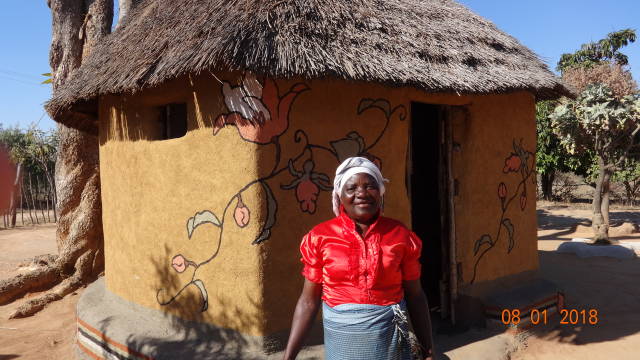
    Climbing down the steep granite hill proved a lot faster than the climb up, and before long we were on the road again…if you can call it that.  What our guide euphemistically referred to as “potholes” were more akin to craters!   The local joke is that you get a free “African massage” on these uber-bumpy roads.  Ha, ha!     Once back on a  relatively better dirt road, we came upon a cluster of typical mud & thatch huts where we made a brief stop.   A cheerful toothless woman answering to the name “Mama”  greeted us, along with her several daughters & grandchildren. She proudly showed us her prized plate collection and the decorated huts in their compound…in hopes that it would somehow enhance her chances of winning the local ‘home beautification’ competition.  We bought a few seed-bead necklaces from her…which made everyone happy!

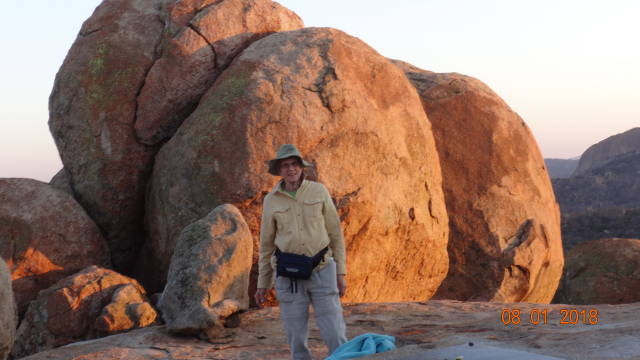
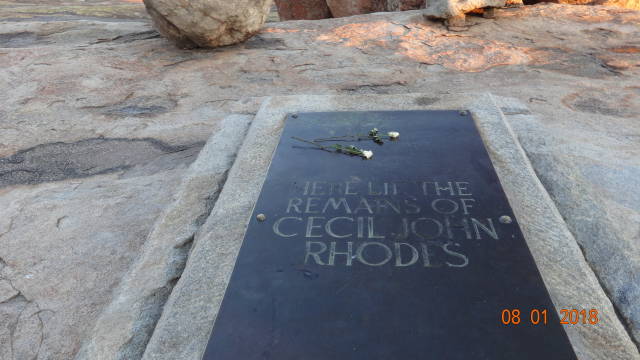
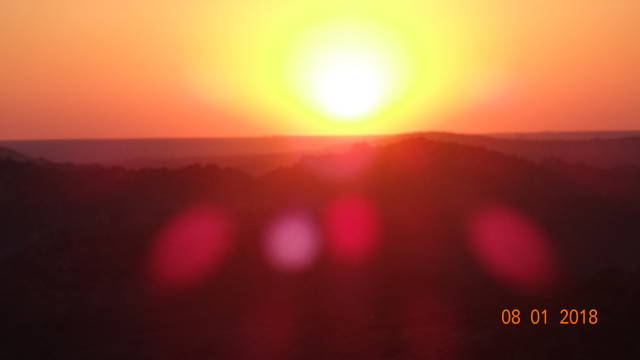
 The sun sets shortly after 6 pm this time of the year in the southern hemisphere, so we hastened to our  last stop of the day-  the grave site of the British-born  South Africa statesman Cecil Rhodes.         En route, we received our second   “ massage” of the day and then climbed a thankfully more gradual grade up to the hilltop where Rhodes’ grave marker lies. We marveled at the giant boulders surrounding us…as we awaited  another fabulous Southern African sunset.  We then scurried as quickly as possible in the failing light back to our vehicle…. still feeling a peaceful inner glow.
 

ancient cave art
ancient cave art
boulders at grave site
Dab among giant boulders
Cecil Rhodes' grave marker
grave marker of Cecil Rhodes
fab African sunset
love those sunsets!
fish eagle
fish eagle looking for a meal
hidden cave with artwork
contemplating the cave art
matriarch of the family homestead
“Mama” and her decorated house
rock formations at reservoir
scenic spot for our picnic

Onward to Victoria Falls

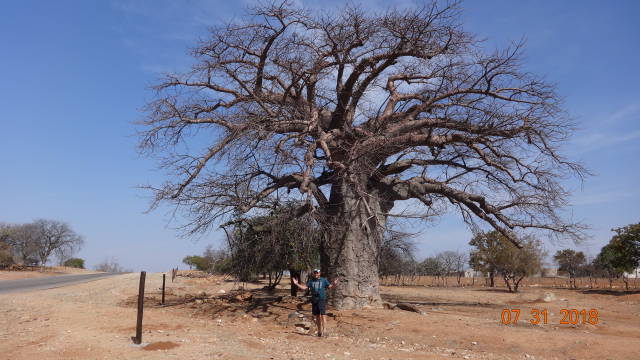
Departing from Bulawayo, we headed northward toward the town of Victoria Falls…the home of one of the 7 natural wonders of the world!   We spent most of the day in the mini-van  …occasionally catching a glimpse of an elephant here or a pair of giraffes there.  Along the way, we came across a prime specimen of  Baobab tree pictured below.  We also  stopped for another compulsory  shoe dip…and this time the police officer on duty gave me permission to take a photo.

 Once we checked into our “big city” hotel, we booked some special activities for our  2 day stay there.   I opted to take the sunset dinner cruise on the Zambezi that evening and the “Boma dinner show” the next night….  and would see the famed Victoria Falls the next day, of course!  I left the helicopter ride and white-water rafting  to my fearless  23 yr. old  Aussie tour mate, Kirsty.  (Btw…she reported that Falls generate so much spray that you can’t see them from the air and the turbulent class 5 rapids are guaranteed to dump you into the cold river water!)

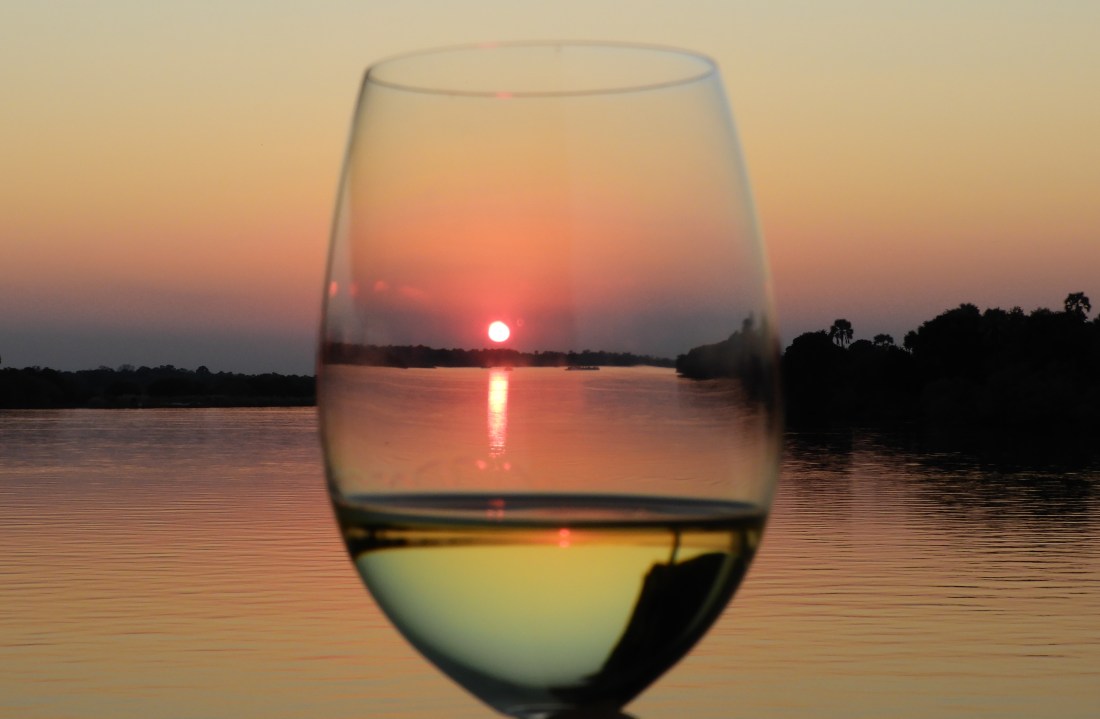
 Unfortunately, I forgot to bring my camera on the sunset cruise… but my memories of that evening are vivid.  Picture this:  a small double-decker boat accommodating ~ 20 passengers equipped with 4 formally- set tables; a full bar (all drinks included);  warm hors d’oeuvres served before dinner; and your choice of 3 gourmet entrees (inc. a veggie one).  The meal was topped off with a scrumptious dessert and after-dinner drinks.  All this “luxury”  while we slowly motored down the smooth-as-glass Zambezi …watching for hippos that often haul out of the water at dusk onto the small islands along our way.   And the sunset was spectacular to boot!   Everyone seemed to feel  totally ‘at peace’ while cruising down the river…or maybe it was all the liquor!  (The photo below was taken by Robert, one of my Aussie tour buds.)

 In contrast, the experience at the Boma dinner show the next night was anything but peaceful!  The word “boma” refers to a make-shift structure used in the bush to keep something in (goats, cattle) and something out (predators).    In this case, it was an enclosure for corraling  paying customers like me!

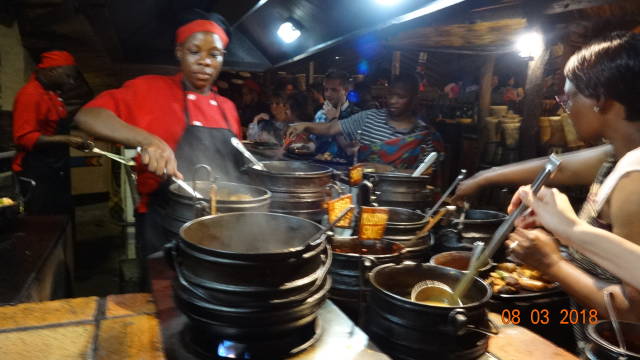
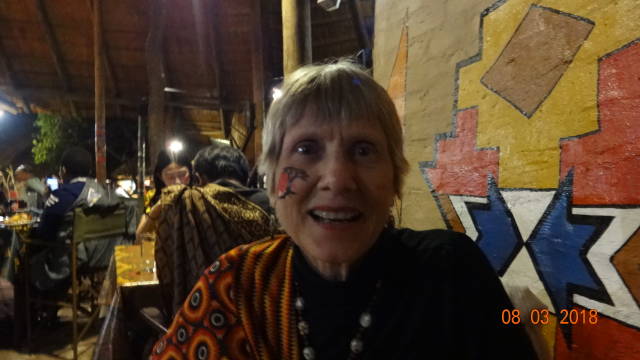
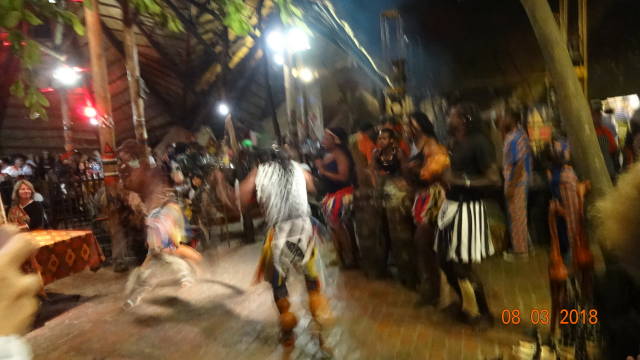
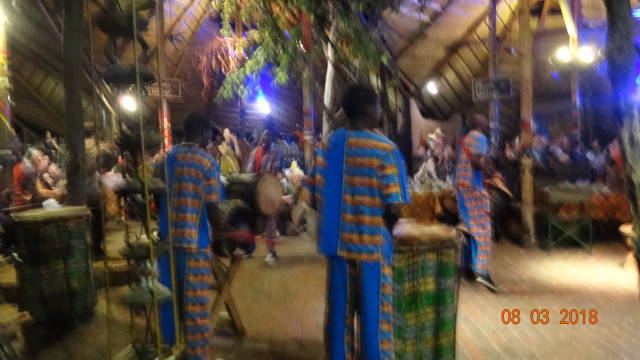
Upon entering the large circular thatched-roof structure, we all donned colorful African cloth wraps and were invited to join the dancers gyrating to the sound of native music.  After a little dancing, we were  lead across the spacious multi-level room  to our table where the wait staff promptly brought  tall, cool libations and “exotic” hors d’oeuvres .  While the 200+ guests waited for the multiple buffet lines to open, a face-painter made the rounds and transformed my countenance with an artistic image of an acacia tree.  The quantity & array of food was mind-boggling…including dozens of delicious veggie & fruit salads, a long table filled with tempting desserts and  another big section where  “game meat” and such delicacies as “roasted insect larvae’ were served.  I skipped that one!

 During dinner and well into the night, the center stage area featured acts by various performers-   a continuous retinue of drummers, singers & dance troupes-  all wearing brightly-hued native garb &  giving  incredibly energetic performances.   Just watching was exhausting!

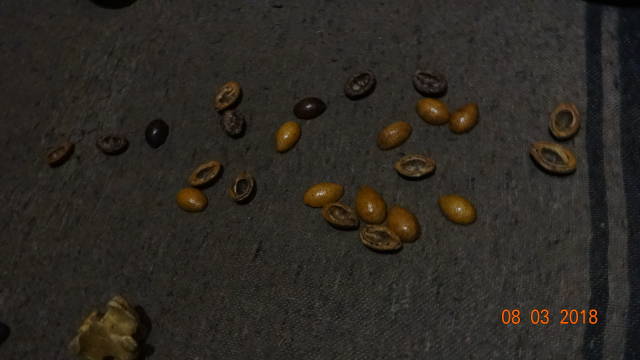
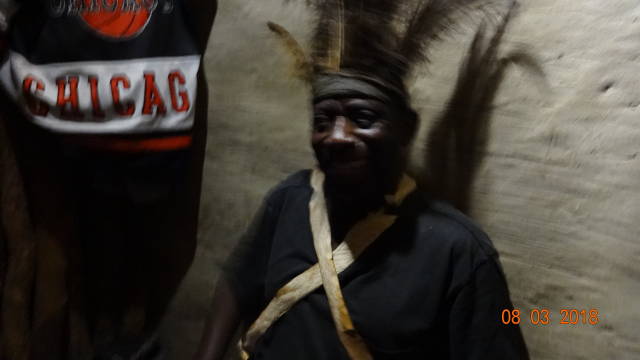
 When we had our fill of both food & entertainment, we wended our way past the stage toward the door…but were intercepted by a shaman offering to “toss the bones” (actually shells) for us.  Who could pass up an opportunity like this…so agreed to let him tell our fortunes in this unique way.  Good news!  My future looks bright, probably owing to the generous “donation” I put in his bowl!

buffet at Boma
one of the buffet lines at the boma dinner
Dab's painted face
Dab’s face-painting
drummers at Boma dinner
drumming performance
fortune-telling shells
shells used to tell fortunes
mandatory shoe cleansing
disinfecting our shoes in Zimbabwe
Robert under Baobab tree
old-growth  baobab tree
shaman bone-thrower
fortune-telling shaman
whirling Boma dancers
dance performance
DSCNE2239.JPG
sunset on the  Zambezi riverboat

The Smoke That Thunders

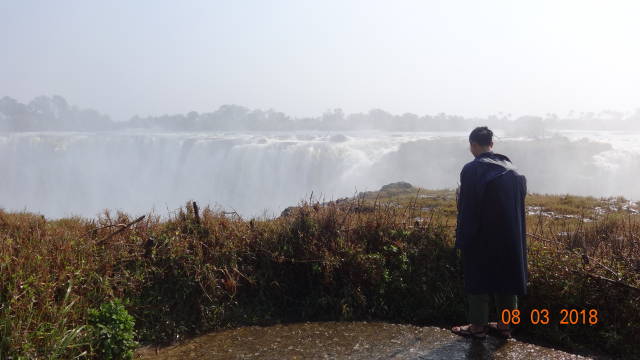
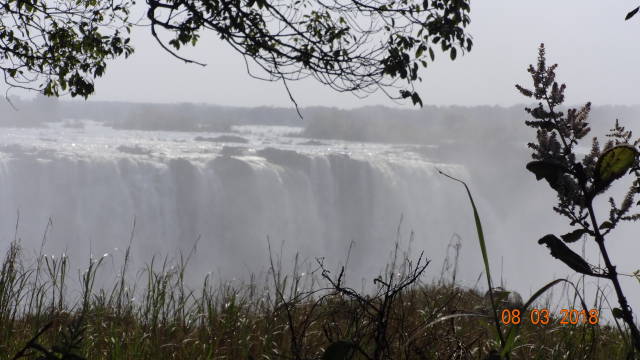
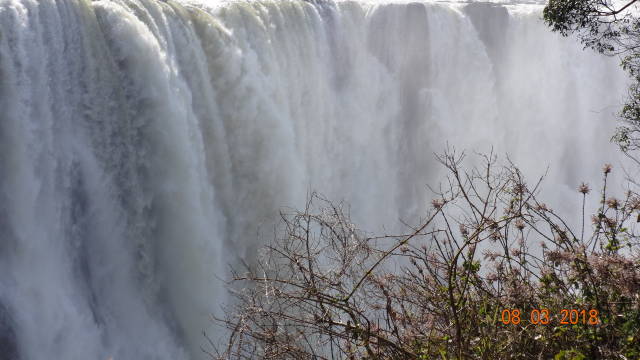
Although neither the highest or widest on the planet, Victoria Falls is considered to be the largest waterfall in the world based on its combined height & width and sheer water volume.  The falls span 5,604 ft. and range in depth from 260-354 ft., with the spray rising an estimated 1,300 ft. from river level.  The name of the falls as we know it was given by the British settlers in honor of their Queen, but the indigenous people refer to this force of nature more poetically:     “Mosi-oa-tunya”…  which means “the smoke that thunders”.  And thunder it does!  The sound & the fury of Victoria Falls are truly awesome!!

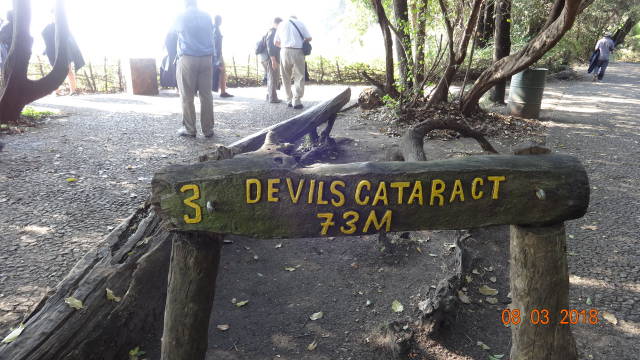
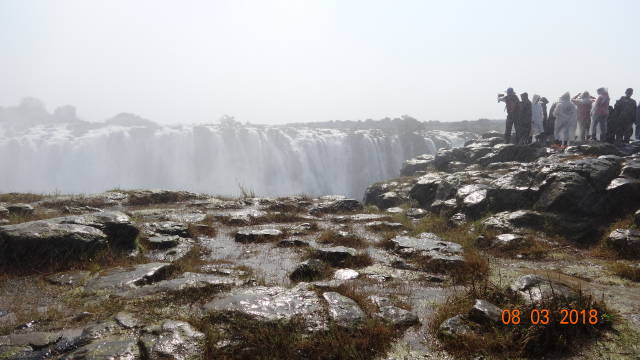
 After entering through the park gates, signage directs visitors to a mile-long path offering the best views of the falls as you look across the river canyon.  The trail is easy to navigate with markers pointing out the named- sections of the falls, but the constant spray  creates puddles & slippery conditions along steep ravine’s edges where the best photo ops are. With few guard rails in place, caution is in order!  And as shown on one of the photos below, most visitors were wisely wearing rain gear to protect their clothing & cameras.   Another historical note:  there are a few islands in the river below  which are usually obscured by all the air-borne water. One is  ‘Livingston Island’,  named (I presume) after this region’s famous explorer.

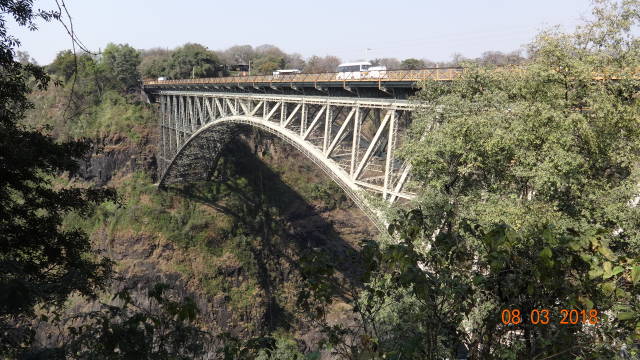
 The path to the end of the trail  eventually turns away from the falls,  where we then gained a view of a high bridge across the mighty Zambezi. This impressive gorge-spanning structure also doubles as the staging site for thrill-seeking bungee-jumpers. Below were raging rapids where other equally impetuous tourists launch their rafts for a wet & wild whitewater experience they may live to regret!

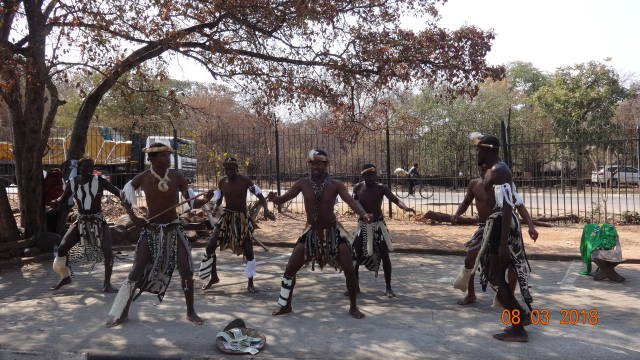
 My roommate & I opted to have a cup of tea at the park’s café instead  (ho, hum), before meeting our driver as arranged.   Our timing to leave the falls area was fortuitous as a troupe of native dancers clad in animal skins was putting on quite a show right there in the parking lot.  Talk about your aerobic exercise- wow!

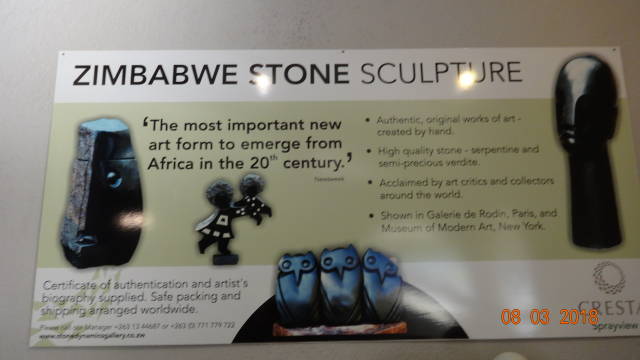
 Then it was back to the “Sprayview “, our aptly-named hotel, to check out the exhibit  of Shona-style  stone sculpture  there.. and then to relax around the pool a bit  before dinner.  Having so much fun can be tiring!

another section of Falls
contemplating the power & beauty of Victoria Falls
bungee jump site
bridge over the Zambezi used for bungee-jumping
Devil's Cataract
following the path on the opposite side of the falls
Falls above Livington Island
Victoria Falls at high noon
native dancers near Vic Falls
native dancers outside Vic Falls park
part of main Falls
the thundering falls
path to Vic Falls view
farther along the path with “the smoke” in the background
pic-taking in the rain
slippery wet rocks are a challenge to photographers
stone sculptures at hotel
Shona sculpture exhibit at our hotel

Chobe National Park, Botswana

(NOTE:  The  first set of photos are from our ” sunset boat ride” on the Chobe River…and the ones below the text were taken during  a morning “game ride” at Chobe NP.)

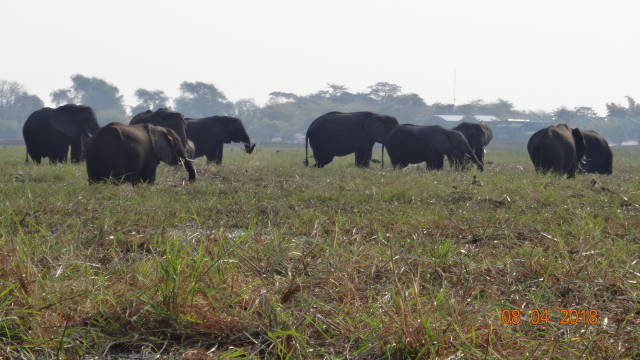
elephants grazing on island
one of many  elephant herds at Chobe NP
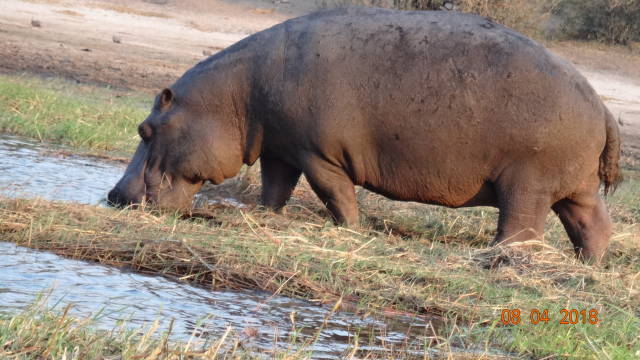
hippo
a hungry hippo
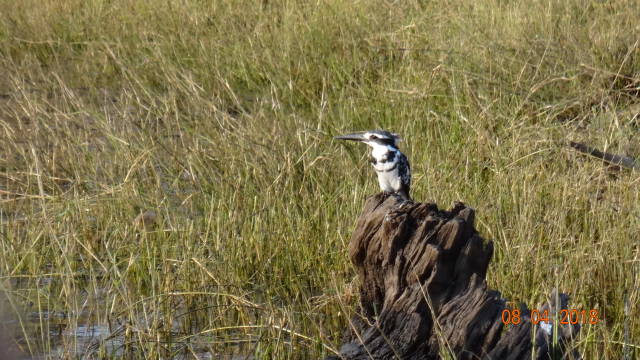
kingfisher
a nicely- posed kingfisher
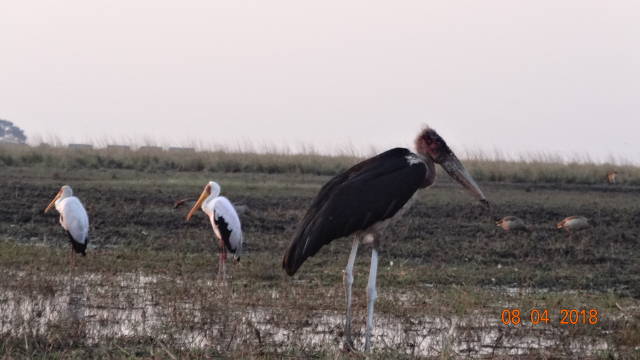
marabou & yellow-billed storks
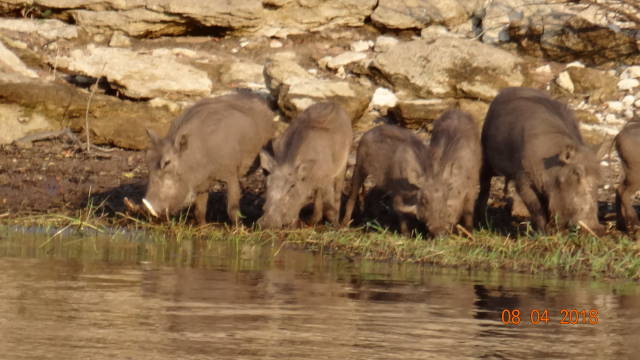
warthogs drinking
warthogs taking a long, cool drink
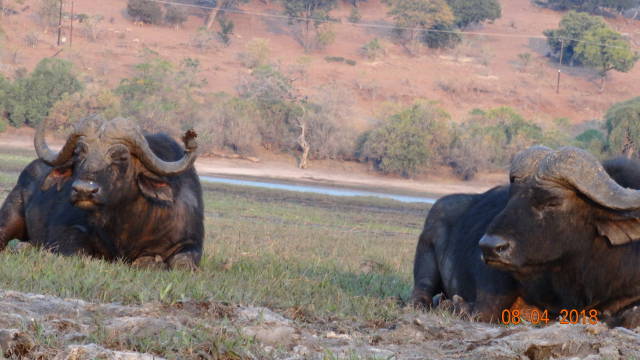
resting buffalo
resting buffalo


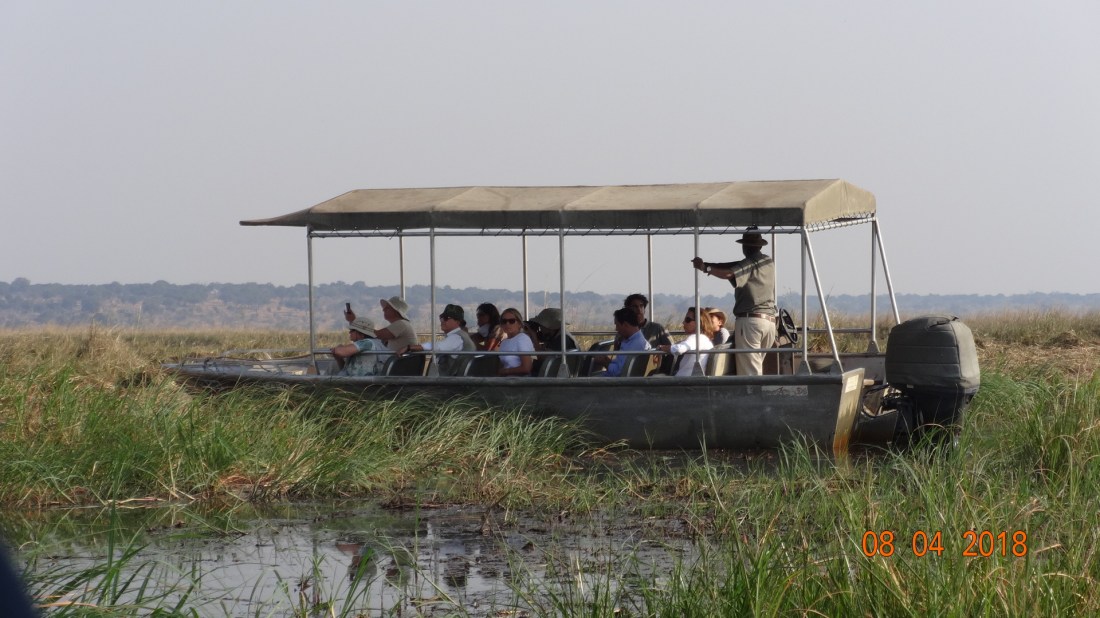
sight-seeing boat on Chobe River
sightseeing boat on the Chobe river
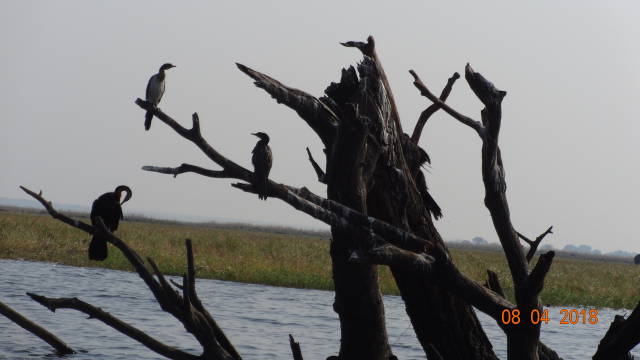
cormorants roosting
roosting cormorants
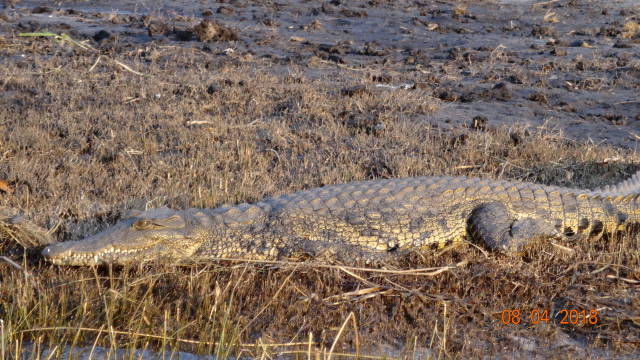
crocodile
a toothy crocodile

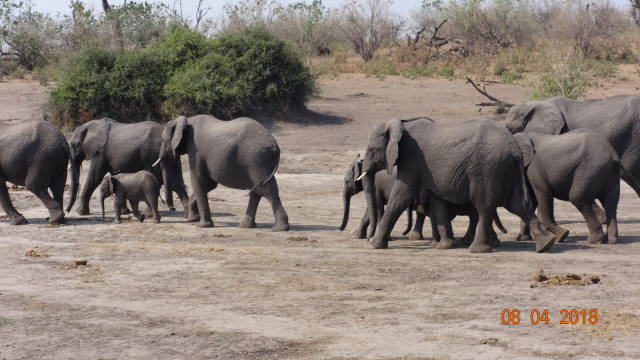
Just a 2 hour drive from Vic Falls (not including the formalities at the border)…  Chobe National Park is situated in northern Botswana, near to the border with both  Zimbabwe and Namibia.  Not only was Chobe Botswana’s first official park, it is now considered one of the best wildlife parks in all of Africa.    Having four distinct environments, Chobe boasts  great concentrations of wildlife as well as wide-ranging  biodiversity.   Home to an estimated 50,000 elephants and an equal number of African/Cape buffalo, along with  healthy populations of hippos, crocodiles and giraffes…this park is sometimes called “The Land of Giants”.  

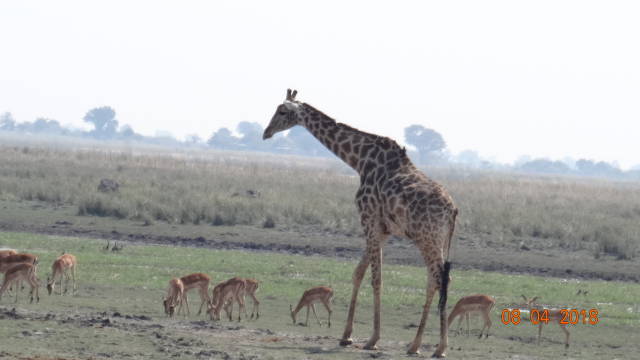
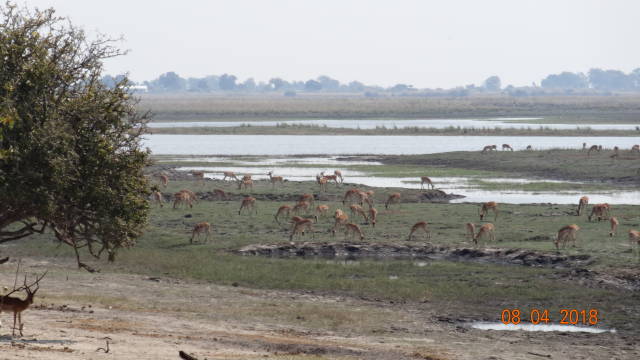
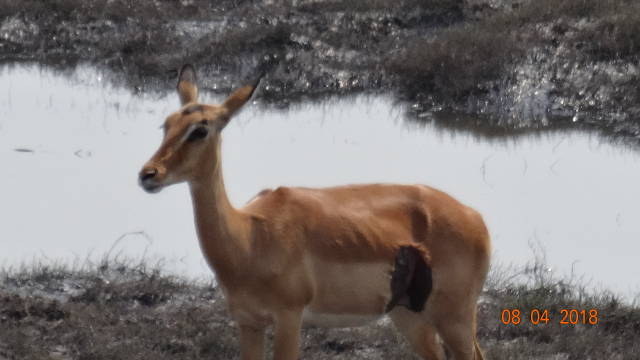
 During the dry season, the marsh areas of the park draw all kinds of animals including many of the region’s 450 types of birds.   Our first wildlife sighting foray at the marshlands was by open-air vehicle as we drove off-road near the water’s edge.   The ambiance here was entirely different than at Kruger NP…with larger numbers of animals feeding at leisure on the lush grasses in the floodplain.   At times we didn’t know where to point our cameras with so many critters in view!  Impalas, giraffes, elephants, baboons, kudus and a variety of birdlife were well-represented….and there was evidence of some unseen  Chobe denizens, too.  Sadly, we came across one bewildered-looking impala with a large gaping wound…thought to be the aftermath of a leopard or lion attack.  Even in this Eden-like setting, suffering & death are inescapable.

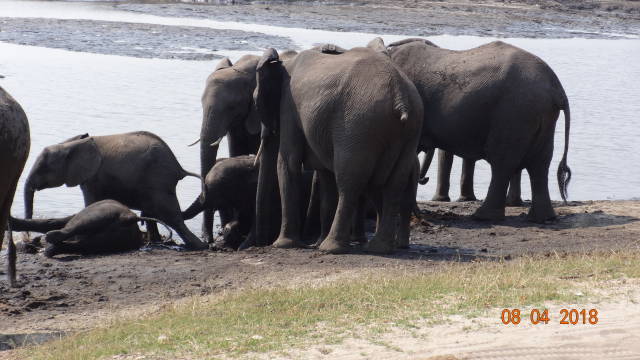
There was much to celebrate in Chobe overall… especially watching the elephants’  obvious pleasure taking mud baths and seeing so many different animal families thriving there. The sheer life force present in the marshland was very uplifting…and whetted our appetite to see more of Nature’s showcase by boat later that day! 

*********************

The late afternoon temps were considerably warmer in the Chobe floodplains, and the river breeze felt refreshing as we motored slowly  toward the small islands where many herbivorous animals can safely feed at night away from predators.  The boat pictured above was considerably larger than ours…and we were warned to keep our hands & other body parts inside our shallow vessel at all times.   After we saw our first crocodile skimming along the water’s surface near-by,  we didn’t have to be reminded twice!

Most of the animals habituating these islands tolerate the presence of boats well and we were able to get closer to most critters…even the hippos & buffaloes… than would be possible otherwise.   We spotted a large herd of elephants grazing on one of the isles and wondered whether it was the same group we had seen crossing the river to the islands earlier in the day.

There were quite a few birds along the shoreline, too, including  tall marabou & yellow-billed storks, tiny kingfishers, Egyptian ducks and many cormorants that were winging their way to good roosts before the sun set.

 When darkness began to fall, we turned the boat around and quickly sped back to the unlit, rickety dock … feeling satisfied that our day had been well-spent in this extraordinary place.          (pix from Chobe NP below)

elephants at Chobe NPJPG
elephants heading for the river
elephants enjoying mud bath
mud baths seemed to be popular
giraffe & impala
Rothschild giraffe towering over impala
grazing impala
the Chobe Delta grasses & water attract many animals
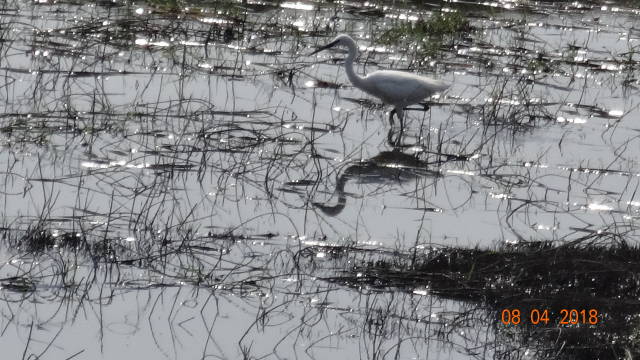
great white egret
a statuesque great white egret
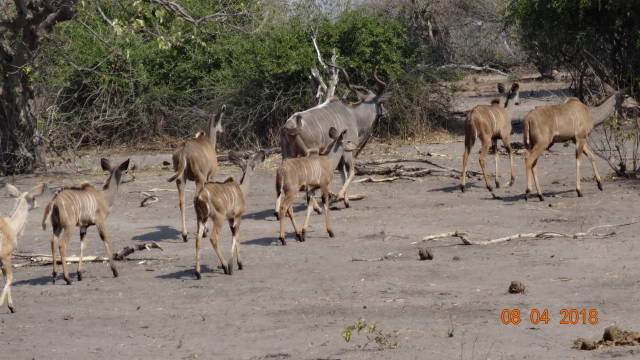
male kudu with his herd
a male kudu & his harem
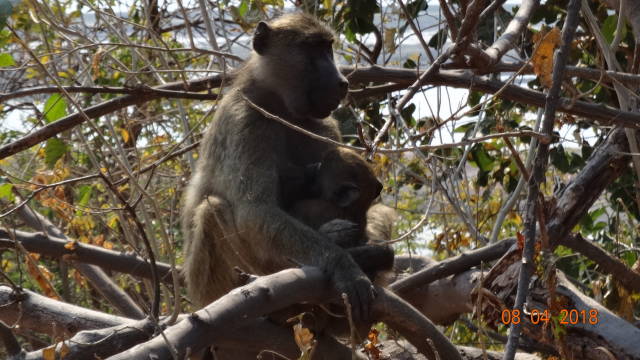
mother & baby baboon
baboon mother & baby
wounded impala
an unfortunate impala that was almost someone’s dinner

Gweta- a small village with a big heart

Being primarily a ‘travel day’, the long ride from Chobe NP to the village of Gweta was uneventful for the most part. We noticed the color of the termite mounds had changed from brown to beige…mainly due to the sandy desert soil in this very dry part of Botswana.   Commonly seen en route were the many unattended donkeys & cows grazing near the roadside….out in the middle of nowhere.  Donkeys are the true “work horses” in Southern Africa, hauling heavy loads of firewood or transporting  people,  and are sometimes raised for their meat as well.  However, despite the pervasive poverty in Botswana,  domesticated animals generally allowed to roam free along-side all manner of wildlife, including large predators.  Shepherds seem to leave their livestock’s welfare to fate!

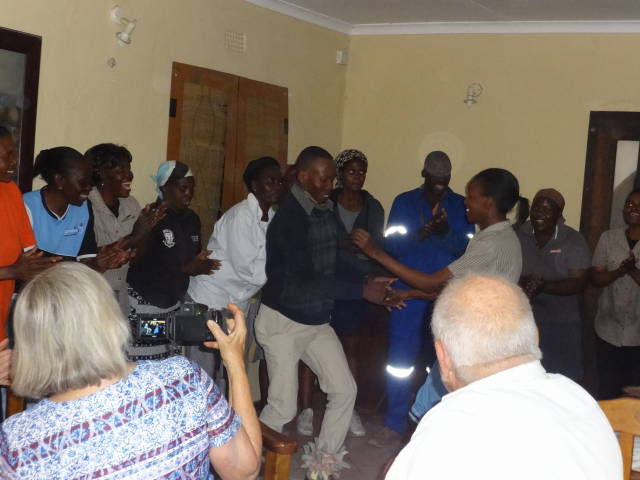
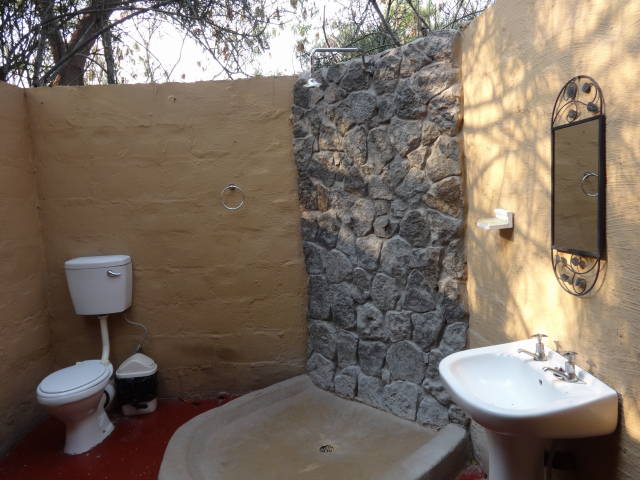
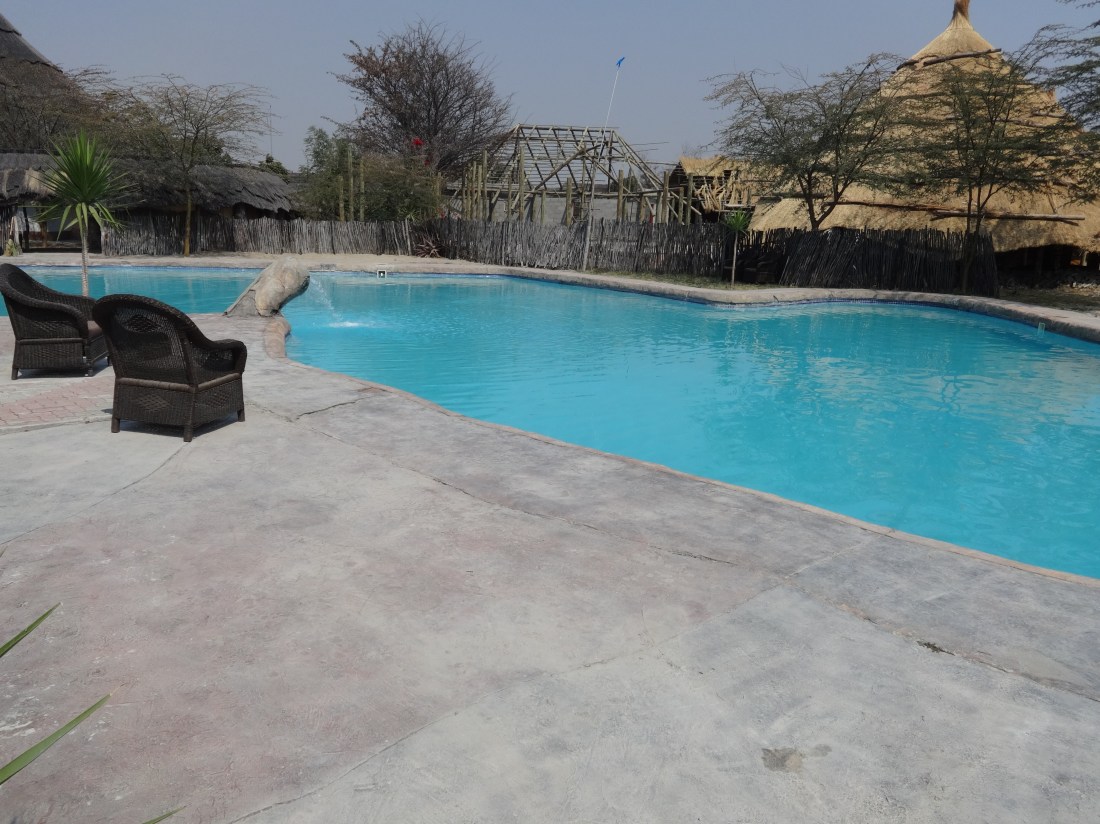
We arrived to our destination at the Gweta Lodge just in time to board another vehicle headed to the salt pans(ancient lake beds) where a family of meerkats is known to dwell.  After sitting in our mini-van for the previous 7 hours, I optedout of this additional 4 hr. excursion in favor of relaxing by the pool and catching-up on email, the iffy internet connection willing.   I was also anxious to shower before dark in the outdoor bathroom.     Apparently, scorpions, spiders & other creepy crawlers are drawn to these easily accessible facilities, so daytime use is preferred…at least by me!     Our evening that night was memorable…not for the meal, but for the unexpected after-dinner entertainment:  a spirited song & dance show staged by the lodge staff!   To enhance the performance, clattering ankle bracelets made of shells were worn by the dancers.   With much clapping, singing & dancing, a good time was had by all-   guests & staff alike!

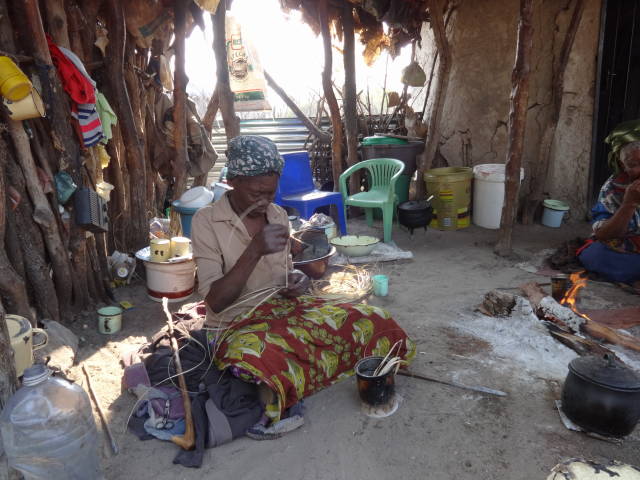
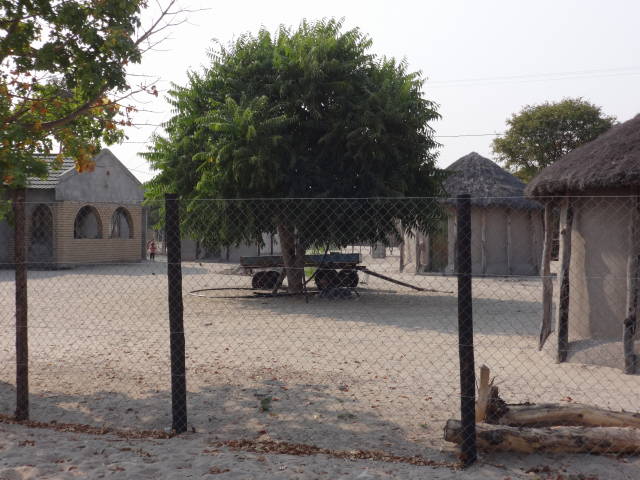
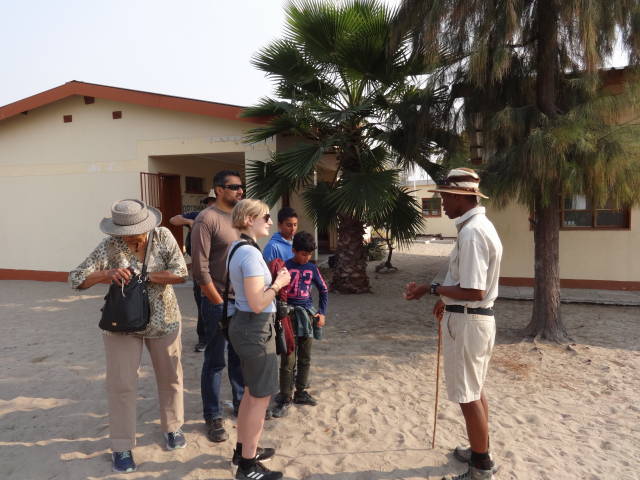
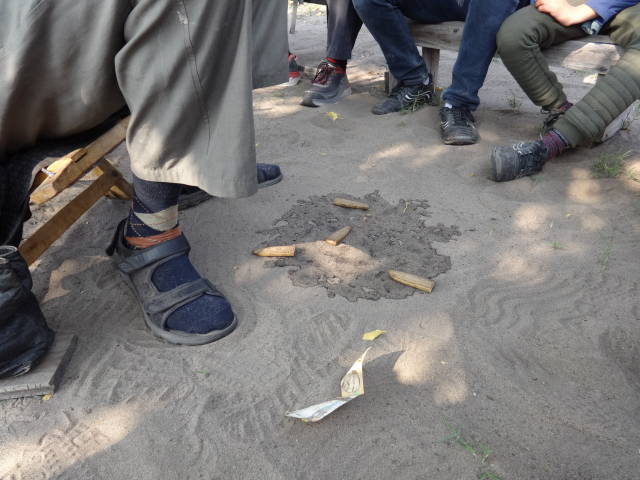
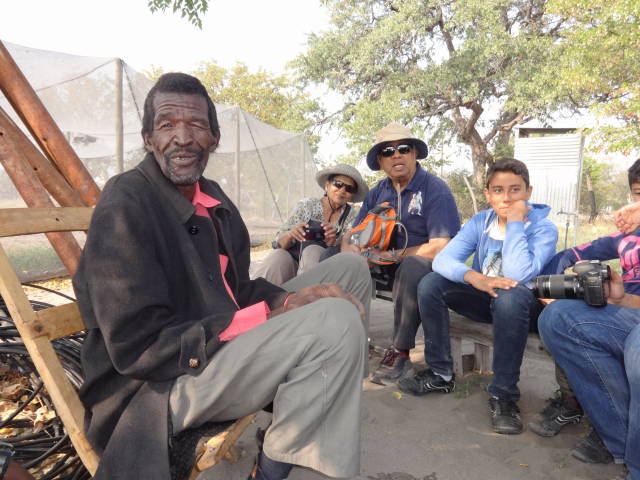
In the morning, a personable villager cum guide led a 2 hour tour of Gweta…which probably could be seen in 10 minutes… but we did make some interesting & worthwhile stops.  First, we visited a woman who ekes out a meager living for her family by selling her baskets-   hand-woven from native reeds & grasses.  We also paid a visit to the local school where we spoke at length with the principal.  Although the facilities there are basic, the care & concern shown to the pupils is quite evident, with special assistance with food, clothing & medical care being available to any needy student in the district.   Our group  also stopped-by to see the weathered-looking village shaman who was willing to “throw the bones” for us…in this instance, using some marked pieces of wood.  No great revelations were revealed, but it was another unique “cultural” experience nonetheless!

 After the village tour, we hopped into the van for our next destination near to the city of Maun, which is the staging area for making excursions into the Okavango Delta…something that I had dreamed of doing for a long time!


basket weaver
Gweta Village basket-weaver
Gweta village center
residences in Gweta
entertainment by staffJPG
Gweta Lodge staff  dancing
outdoor bathroom
outside bathroom
visit to the local school
waiting to meet the principal at the local school
pool at Gweta Lodge
the kids loved swimming in this pool after a long day on the road
tossing the bones in Gweta
more fortune telling
shaman in Gweta
the local shaman & the nice family that had joined our group